
Qigong, Taichi and your health
Many people reach the shores of the Chinese Internal Arts, such as Qigong and Taichi, in order to find a firm terrain where to build a stronger and more energetic system. Even before they start to train, they have already, and correctly, embraced an holistic approach that highlights how the energetic balance of Body, Mind and Spirit is essential to create a whole and integrated health system. This is the vision of the ancient Chinese people, as well as of almost all of the cultures that predates the post-industrial society we live in.
Circulating the “Qi”
Ancient Chinese practitioners were adamant about one thing: if “Qi” circulates freely in the body, the body health will be strong, while if the Qi is stuck or stagnant, the body health will be poor. And they also observed that while human beings have something more than other animals, they also have something less, in terms of the ability to let Qi circulate and be abundant. Thus the need for specific actions (Chinese classic medicine) or practices (Qigong and Taichi) that aim at restoring a balance which tends otherwise to fade with the ageing process.
Learn to move
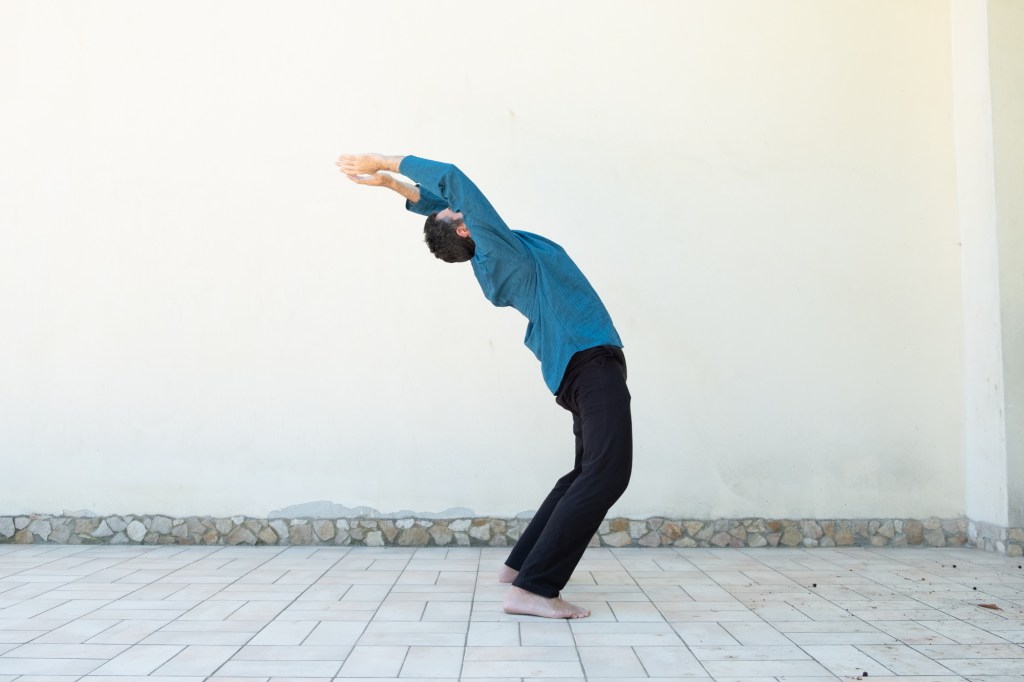
The first thing that a Qigong or Taichi practitioner is required to learn is how to move the body while maintaining determined standards, so that she/he enhances the control over her/his own body mass, while at the same time maintaining body alignment and joints free of constraints. You may be a formidable runner, an experienced Pilates or Yoga practitioner, and still not be able to perform the movements with the required standards.
Learn to stand
In the same time a Qigong or Taichi practitioner is also required to learn how to stand, meaning to critically examine her/his own vertical strategy, recognise how this strategy departs from a more efficient alignment, learn how to listen for the body request of a better balance, and persuade her/himself to yield to such internal request, letting go and beginning the sinking/settling process of the Qi.
 Miami Taichi